





Tuning fork therapy
What it is about
Tuning forks produce precise frequencies and gentle vibrations that can be heard and physically felt. Their subtle vibrations can help create moments of inner calm, enhance body awareness, and support a sense of balance and well-being.
Whether used for meditation, mindfulness, or conscious relaxation, tuning forks offer an accessible way to explore sound, vibration, and resonance in your everyday routine.
On this page:
Practice
Tuning forks can be used at home as part of a meditation or relaxation practice, or simply to explore the effects of sound and vibration.
There is no fixed routine you need to follow. Especially when starting out, it can be helpful to keep the session simple and become familiar with the sound and vibration of the tuning fork first.
Alternatively, tuning forks are also used by professional practitioners who offer structured and comprehensive treatments.

Preparation
Create a comfortable atmosphere where you can relax for a few minutes. It can be helpful to drink some water or warm tea before and after your session. Take a moment to settle in, set a simple intention for your practice, and bring your attention to the area of the body you would like to explore with the tuning fork.
Getting Started
Before you begin, find a quiet and comfortable place where you can focus on the experience without distractions. There are different approaches to working with tuning forks, and when starting out, you do not need to follow a specific sequence or focus on particular points. Try placing the activated tuning fork on different comfortable areas of the body and notice how the vibration changes depending on the point of contact. If you apply the tuning fork to one side of the body, you can repeat the same process on the corresponding area on the other side. Short sessions are an easy way to become familiar with the tuning fork and can be integrated into a morning or evening routine.

Activating the tuning fork
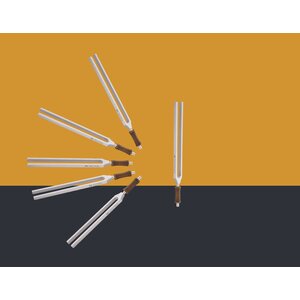
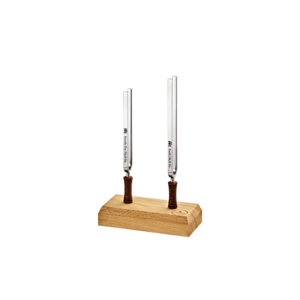
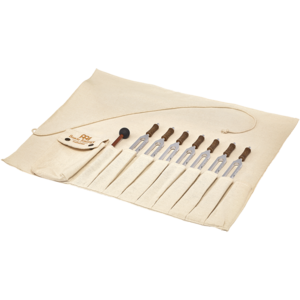
Hold the tuning fork by its cork grip and gently strike one of the prongs against the ball of your thumb. You can also activate the tuning fork by gently striking one of the prongs against your knee or by using a suitable rubber mallet, such as the Meinl Sonic Energy Professional Mallet. Once activated, the tuning fork produces an audible tone and a vibration that can be felt through the handle.

Listening to the frequency
Start by listening to the tuning fork. Close your eyes and bring the tuning fork to your left ear and then to your right ear, allowing yourself to attune to the deep, resonant vibration of the fork.

Placing the tuning fork
Activate the tuning fork again and gently place the end of the handle on a comfortable area of the body. Keep it in place while it vibrates and pay attention to how the vibration feels. Once the vibration has faded, you can activate the tuning fork again and repeat the process.
Why we trust in nickel plated steel
We deliberately choose nickel-plated steel over aluminum for its unique combination of sound, stability, and feel. T
The nickel-plated finish protects the surface against corrosion and abrasion, ensuring lasting quality and durability. At the same time, the slightly higher weight naturally creates a comfortable, well‑controlled pressure on the body, allowing the instrument to work effectively without additional effort.

Choosing the right Tuning Fork
There are different approaches to choosing a tuning fork, and individual preferences can vary. If you are new to tuning forks, you can start by comparing different frequencies and choosing one whose sound and vibration you find comfortable. Some holistic traditions also associate certain frequencies with specific qualities, planets, or energetic concepts. These associations are based on traditional or holistic perspectives and should not be understood as scientifically established effects.
For those just beginning to explore tuning fork practices, the following tuning forks are commonly chosen because of their balanced and accessible character.

Earth-Year/OM (136,10 Hz)
The Earth‑Year tuning fork has a warm and steady tone. Many people appreciate its balanced and grounding character, which makes it a popular choice for beginners who prefer a calm and centering frequency.

Venus (221,23 Hz)
The Venus tuning fork has a bright and gentle tone. In holistic traditions, this frequency is associated with harmony and appreciation, which is why some people enjoy its uplifting character.

Master Fork (256 Hz)
The Master Fork produces a clear, focused tone. Some traditions link this frequency to symbolic ideas of clarity and alignment, which is why it is often chosen by beginners who prefer a straightforward and neutral sound.
TCM – Exploring Traditional Sound Concepts

Alongside planetary tunings, some traditional approaches such as Traditional Chinese Medicine (TCM) use their own frequency systems and cultural frameworks to explore sound and vibration. For those exploring TCM‑inspired concepts, Meinl Sonic Energy offers both Therapy Tuning Forks and Crystal Tuning Forks, which provide long sustain and distinct tactile qualities. These perspectives belong to traditional and holistic practices and offer an additional way to engage with sound and resonance.
Discover all of our Tuning Forks
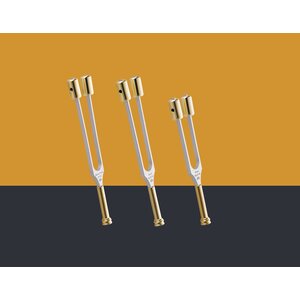
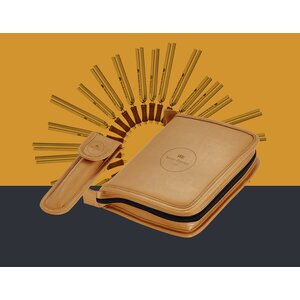
Meinl Sonic Energy tuning forks are made in Germany from nickel‑plated steel and carefully tuned to their specified frequencies. The steel construction provides a long‑lasting resonance, while the cork grip allows the tuning fork to be held and activated comfortably without noticeably affecting its vibration. The rounded end of the handle offers a smooth contact surface when the tuning fork is placed on the body.
Meinl Sonic Energy offers a wide range of tuning forks with different frequencies to support various approaches to working with sound and vibration.

Planetary Tuning Forks are tuned according to Hans Cousto’s Cosmic Octave calculations and correspond to the frequencies of the planets. Their balanced construction provides a long sustain while remaining lightweight, easy to handle and making them suitable for a wide range of sound and vibration practices.

Planetary Therapy Tuning Forks are also tuned according to Hans Cousto’s Cosmic Octave calculations but feature a thicker and heavier construction. This design creates a very long sustain and allows the tuning fork to be activated less frequently during use.

Crystal Tuning Forks are made from pure quartz and tuned to 440 Hz, 432 Hz or selected Solfeggio frequencies. Their material creates an ultra‑long sustain and a bright, clear tone with a distinct tactile feel. They offer a different acoustic and physical experience compared to metal tuning forks.


